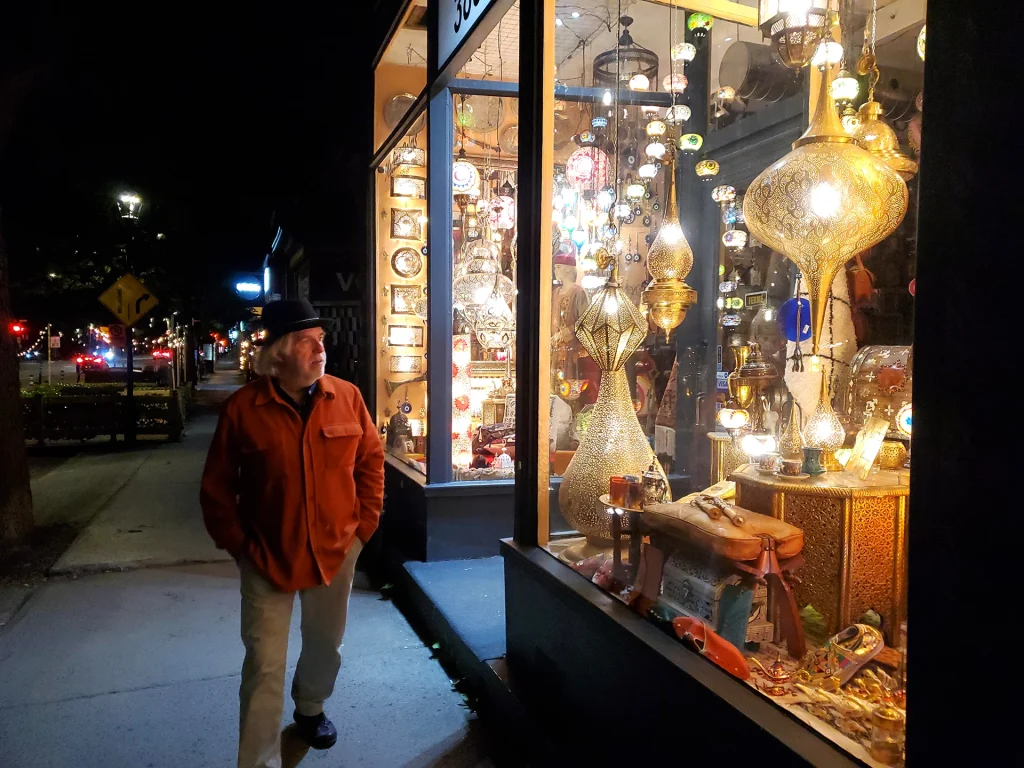
Elbert Barthault
PRÉFACE À MA DÉMARCHE
Ma pratique ne s’est jamais développée en ligne droite. Elle s’est déployée par strates, par retours, par oublis et réapparitions. Depuis ma naissance, les images m’accompagnent. Pendant des décennies, j’ai produit des corpus sans les nommer, sans les organiser, sans chercher à les inscrire dans une histoire. Je travaillais, j’accumulais, je dérivais d’un projet à l’autre. Certains se sont imposés, d’autres sont restés dormants dans des boîtes, des disques durs, des carnets. Aujourd’hui encore, en fouillant mes archives, je découvre des ensembles que j’avais oubliés. Le nombre exact importe peu : 38, 43, peut‑être davantage. Ce n’est pas une liste, c’est un dépliement.
Ce n’est qu’après plus de soixante années de pratique que j’ai commencé à écrire pour accompagner ces projets. L’écriture arrive tard, mais elle arrive juste : elle me permet de lire ce que j’ai fait, de comprendre les liens, les écarts, les bifurcations. Elle n’explique pas mon travail, elle le rend lisible.
Ma démarche actuelle s’inscrit dans cette continuité : une pratique radicante, mouvante, poreuse, qui se déploie plutôt qu’elle ne se fixe. Ce texte n’est pas une synthèse : c’est une entrée dans la constellation.
DÉMARCHE
Je ne suis pas un artiste enraciné. Je suis radicant, au sens de Bourriaud : mes racines ne sont pas fixes, elles se déplacent, se greffent, s’adaptent. Je pousse là où le terrain est fertile, là où l’image tremble, là où un geste peut faire sens. Mon territoire est mouvant, composite, traversé par des flux — humains, visuels, scientifiques.
Je travaille avec la photographie, la performance, l’installation, la manœuvre, l’action participative. Pour moi, ce ne sont pas des disciplines, mais des protocoles d’échange. Je ne cherche pas à produire des objets : je crée des situations poreuses, des espaces de friction entre le réel et sa représentation.
Je détourne des images de l’actualité, je fouille les réserves muséales, les évidences qui n’en sont pas, j’infiltre les laboratoires de recherche, les lieux communs. Ces milieux sont pour moi des réservoirs de matière visuelle, des archives dormantes que je réveille pour en faire des tableaux critiques, des gestes poétiques, des hommages ambigus.
Je parcours aussi le monde à travers Google Earth. Je m’approprie la surface de la Terre comme une matière à composer, à découper, à révéler. Les paysages virtuels deviennent des terrains d’exploration, des fragments cartographiques que je transforme en œuvres visuelles. C’est une forme de voyage immobile, une dérive numérique qui prolonge mon regard critique sur l’organisation du monde.
Yves Michaud parle d’un art à l’état gazeux — dissous, diffus, insaisissable. Je le réinterprète : le gaz n’est pas une perte, c’est une nécessité. L’art gazeux est un art vital, comme l’oxygène. Il circule, il pénètre, il nourrit. Il ne s’expose pas, il s’infiltre. Il ne s’impose pas, il respire.
Dans ce contexte, je ne me considère ni comme un producteur ni comme un exposant. Je me vois comme un agent atmosphérique, un catalyseur de sens. Je n’ai pas besoin d’être intégré au milieu artistique pour exister. J’agis dans les marges, dans les interstices, dans les zones de turbulence. Je suis reconnu ou pas par mon action, pas par l’institution.
Certains de mes projets, trop poreux ou trop théoriques pour les cadres habituels, trouvent leur lieu dans l’intervalle — là où l’art se pense avant de se montrer. Face à certaines résistances institutionnelles, je poursuis une pratique qui échappe aux formats attendus, préférant les zones de friction, les gestes furtifs et les présences sans protocole.
J’aimerais parfois exposer dans des lieux institutionnels — centres d’artistes, musées, espaces publics. Non par besoin de reconnaissance, mais pour offrir à mon travail un espace d’écoute, de résonance, de partage. Pourtant, l’effort de représentation, les jeux de posture, la compétition implicite, les sous-entendus stratégiques m’épuisent. Je ne veux pas me vendre, je veux me rendre présent. Je ne veux pas convaincre, je veux proposer. Je ne veux pas performer l’artiste, je veux habiter l’art.
Être artiste, pour moi, ne se résume pas à exposer. C’est prendre position en tant qu’humain. C’est interroger mes gestes, mes dépenses d’énergie, ma part dans l’affaiblissement du vivant. C’est reconnaître l’absurde sans s’y soumettre. Je vois notre époque comme une course vers le précipice, une chorégraphie de lemmings persuadés que leurs petits efforts suffiront.
Je ne crois pas à la grandeur des gestes spectaculaires. Je crois à l’acte de construire une maison pour ma famille comme une œuvre. Je crois à l’attention portée à mes enfants comme une pratique artistique. Je crois que l’art peut être un abri, un outil de transmission, un espace de respiration dans un monde saturé.
Je ne suis pas un artiste de centre. J’agis de terrains en espaces, sans chercher à être validé. Je cherche à être vivant.
PREFACE TO MY ARTISTIC APPROACH
(to appear at the top of the “Approach” section)
My practice has never developed in a straight line. It has unfolded in layers, in returns, in forgettings and reappearances. Since my birth, images have accompanied me. For decades, I produced bodies of work without naming them, without organizing them, without trying to place them within a history. I worked, I accumulated, I drifted from one project to another. Some asserted themselves, others remained dormant in boxes, hard drives, notebooks. Even today, as I dig through my archives, I discover bodies of work I had forgotten. The exact number doesn’t matter: 38, 43, perhaps more. It isn’t a list — it’s an unfolding.
It was only after more than forty‑five years of practice that I began to write alongside these projects. The writing comes late, but it comes at the right time: it allows me to read what I have done, to understand the links, the gaps, the bifurcations. It doesn’t explain my work — it makes it legible.
My current approach follows this continuity: a radicant, shifting, porous practice that unfolds rather than fixes itself. This text is not a synthesis; it is an entry point into the constellation.
ARTISTIC APPROACH
I am not an artist with fixed roots. I am radicant, in Bourriaud’s sense: my roots are not anchored, they move, graft, adapt. I grow where the ground is fertile, where the image trembles, where a gesture can make sense. My territory is mobile, composite, crossed by human, visual, and scientific flows.
I work with photography, performance, installation, manoeuvre, participatory action. For me, these are not disciplines but protocols of exchange. I am not trying to produce objects; I create porous situations, spaces of friction between the real and its representation.
I divert images from the news, I dig through museum reserves, through evidences that are not really evidence, I infiltrate research laboratories and common spaces. These environments are reservoirs of visual material, dormant archives that I awaken to turn into critical tableaux, poetic gestures, ambiguous homages.
I also travel the world through Google Earth. I treat the surface of the Earth as a material to compose with, to cut, to reveal. Virtual landscapes become exploration grounds, cartographic fragments that I transform into visual works. It is a form of immobile travel, a digital drift that extends my critical gaze on the organization of the world.
Yves Michaud speaks of art in a gaseous state — dissolved, diffuse, elusive. I reinterpret it: gas is not a loss, it is a necessity. Gaseous art is vital, like oxygen. It circulates, it penetrates, it nourishes. It does not exhibit itself; it infiltrates. It does not impose itself; it breathes.
In this context, I do not see myself as a producer or an exhibitor. I see myself as an atmospheric agent, a catalyst of meaning. I do not need to be integrated into the art world to exist. I act in margins, in interstices, in zones of turbulence. I am recognized — or not — through my actions, not through institutions.
Some of my projects, too porous or too theoretical for conventional frameworks, find their place in the interval — where art is thought before it is shown. Faced with certain institutional resistances, I continue a practice that escapes expected formats, preferring friction zones, furtive gestures, and presences without protocol.
I sometimes wish to exhibit in institutional spaces — artist‑run centres, museums, public venues. Not out of a need for recognition, but to offer my work a space for listening, resonance, and sharing. Yet the effort of representation, the posturing, the implicit competition, the strategic undertones exhaust me. I do not want to sell myself; I want to make myself present. I do not want to convince; I want to propose. I do not want to perform the artist; I want to inhabit art.
Being an artist, for me, is not limited to exhibiting. It is taking a position as a human being. It is questioning my gestures, my energy expenditure, my part in the weakening of the living. It is recognizing the absurd without submitting to it. I see our era as a race toward the cliff, a choreography of lemmings convinced that their small efforts will be enough.
I do not believe in the grandeur of spectacular gestures. I believe in building a house for my family as an artwork. I believe in the attention I give my children as an artistic practice. I believe art can be a shelter, a tool for transmission, a space of breathing in a saturated world.
I am not a centre‑based artist. I move from terrain to terrain, from space to space, without seeking validation. I seek to be alive.