FOLK ART Elbert et plusieurs artistes rendent hommage aux couturières dans l’espace MRRC
Proposition participative
Phos 2016
Dans le cadre de ma maîtrise interdisciplinaire en art, j’ai proposé un projet participatif pour l’événement Phos à Matane, situé dans l’ancienne usine Canadelle — un lieu industriel fermé depuis plusieurs années, encore propriété d’un entrepreneur montréalais. Inspiré par le projet Food de Gordon Matta-Clark (1971), j’ai imaginé une action artistique qui réactive la mémoire ouvrière du lieu.
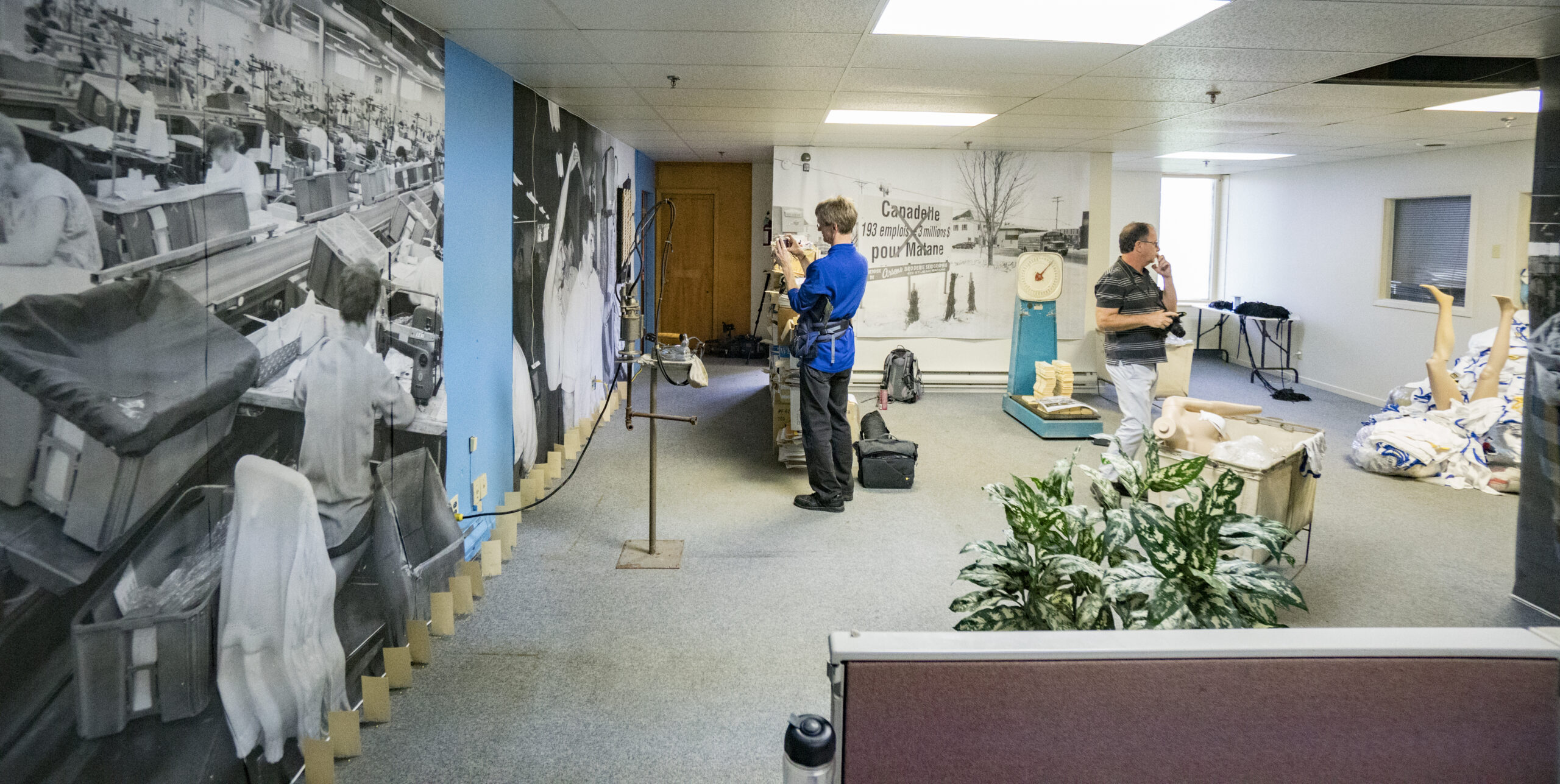
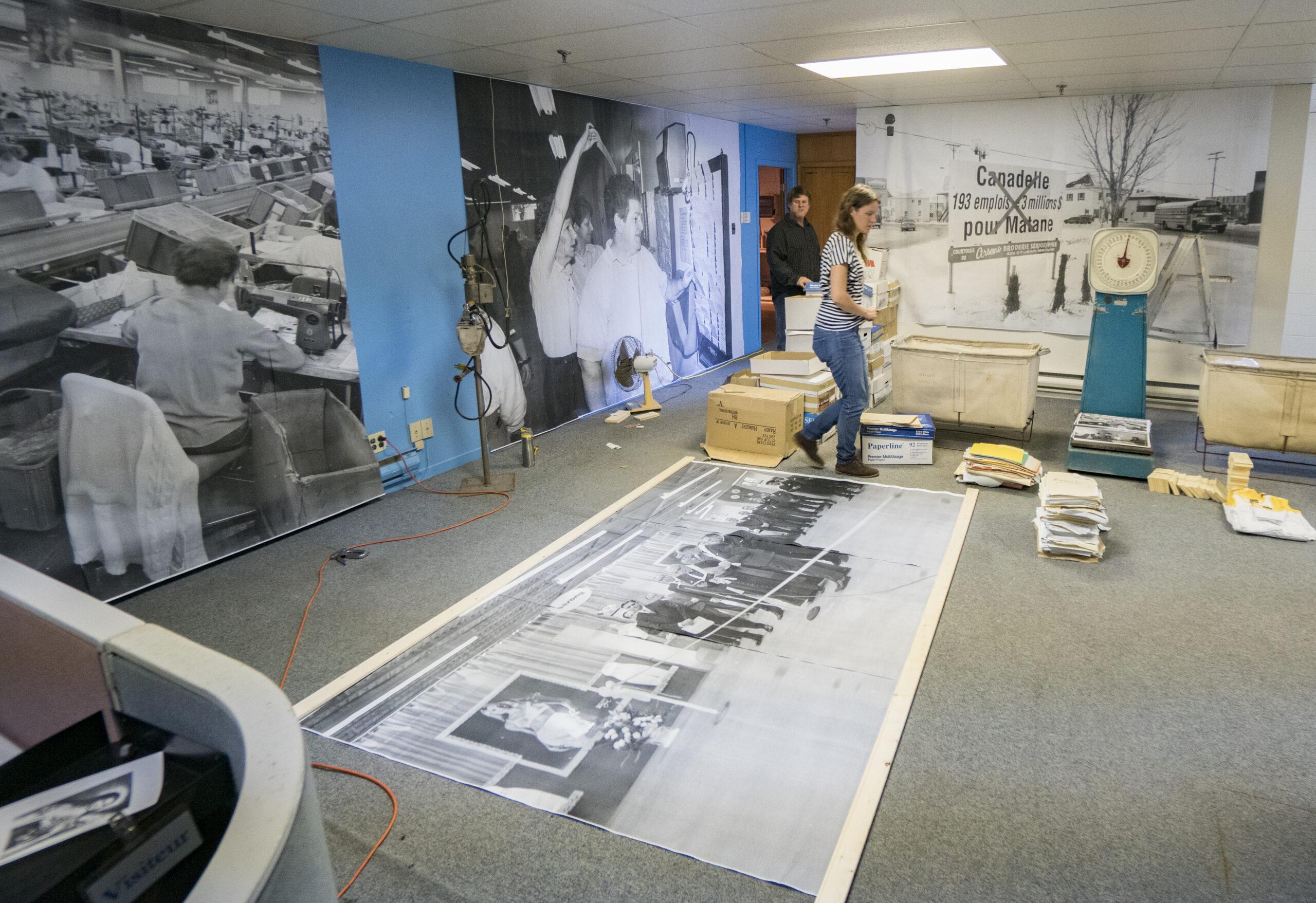
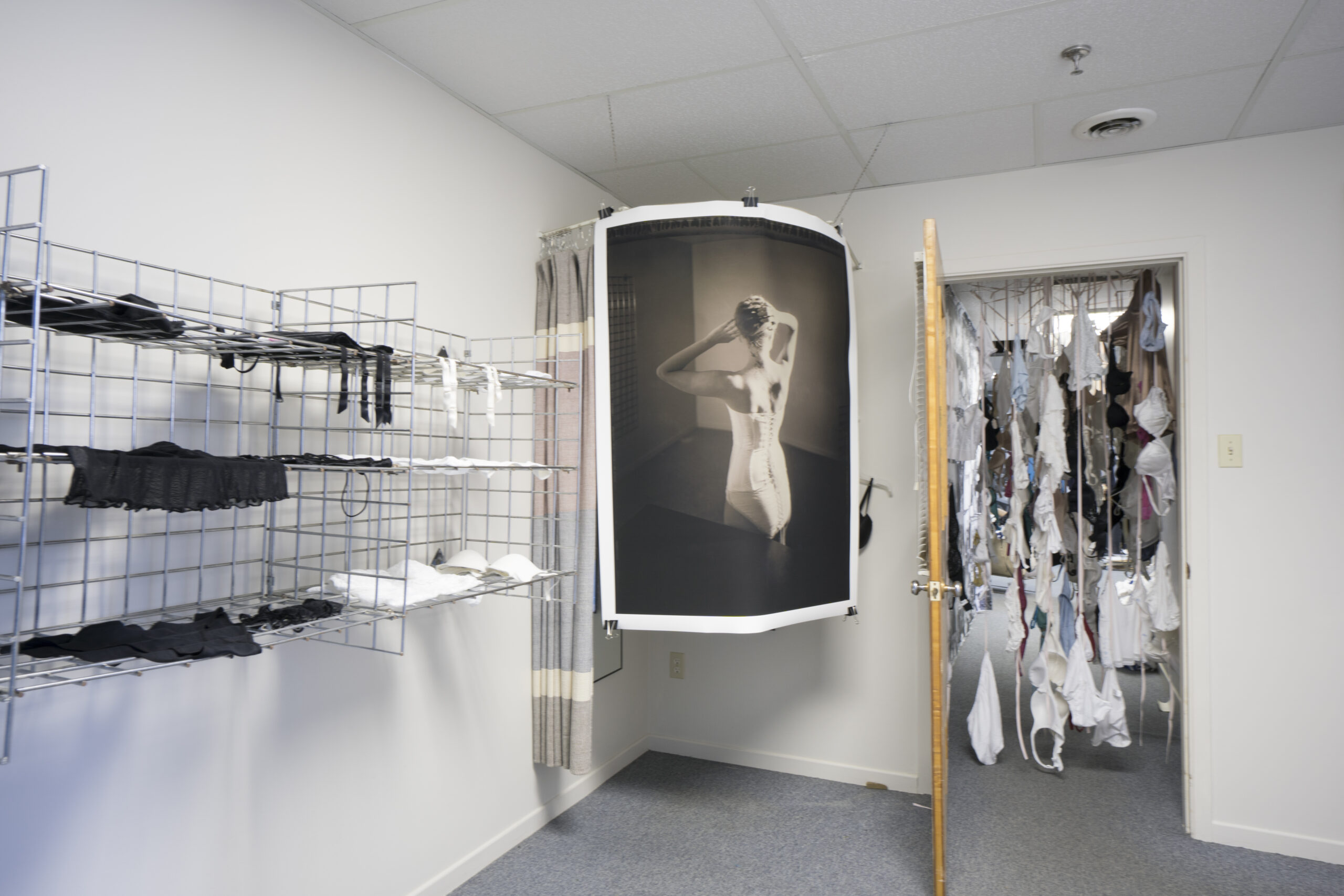
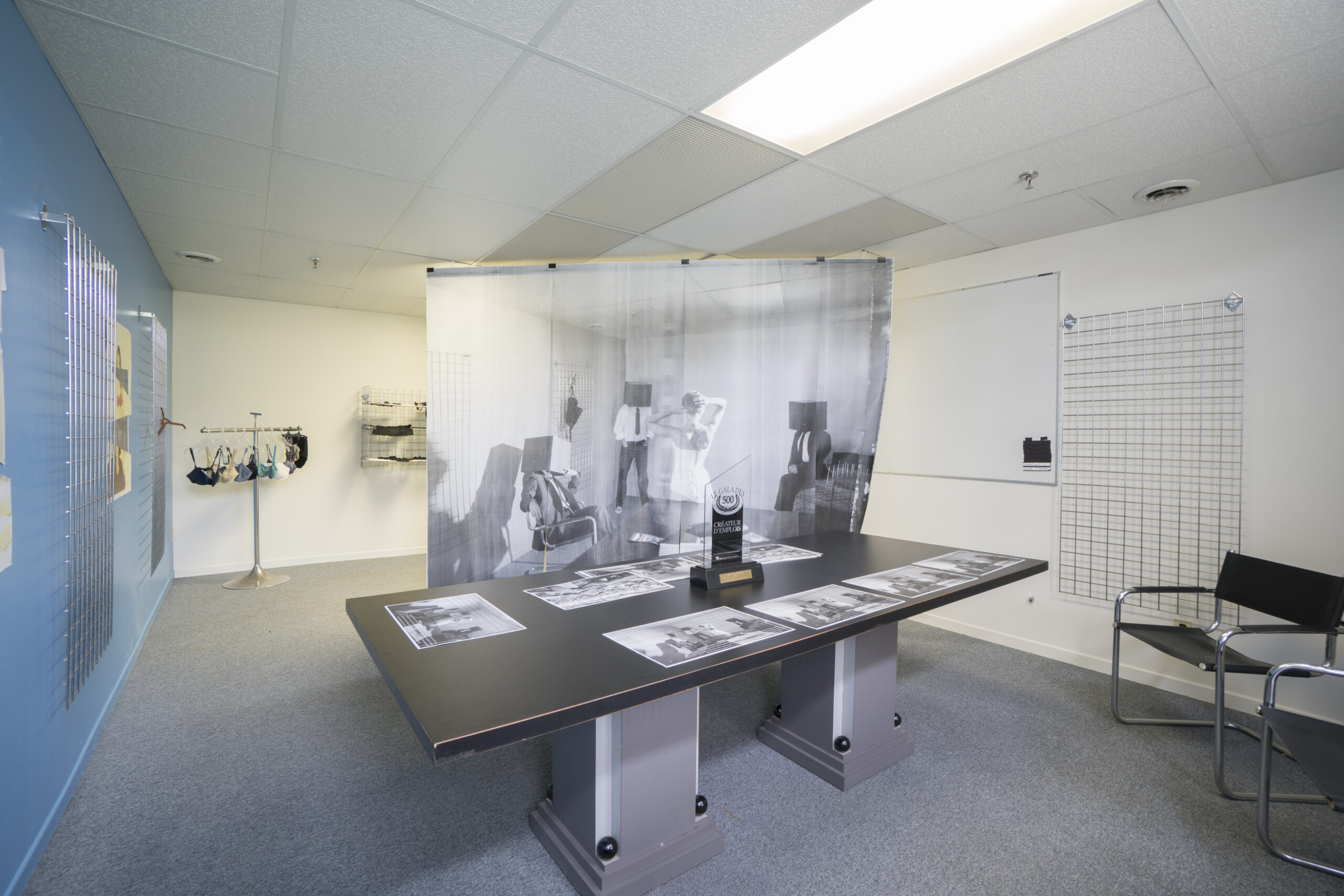
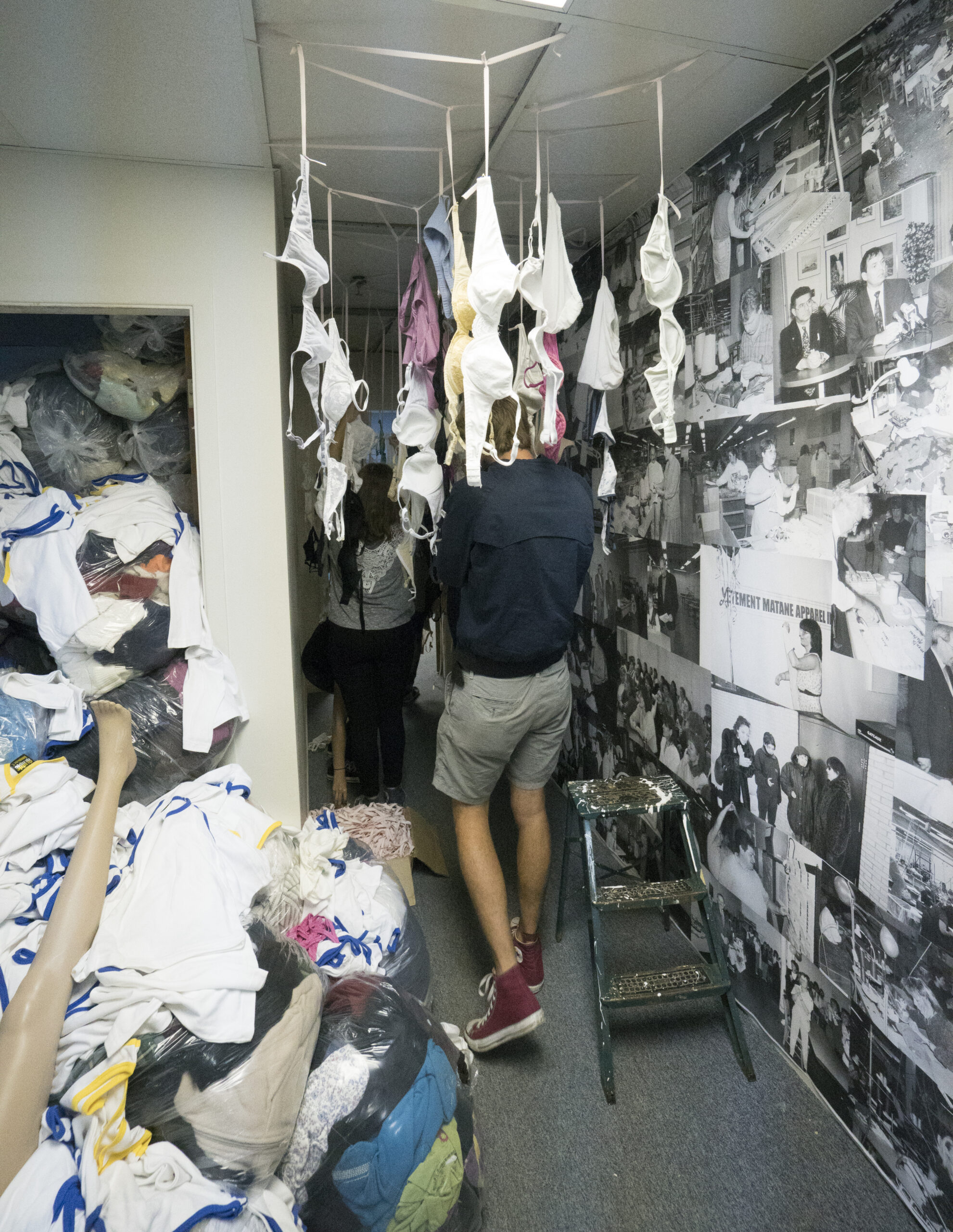
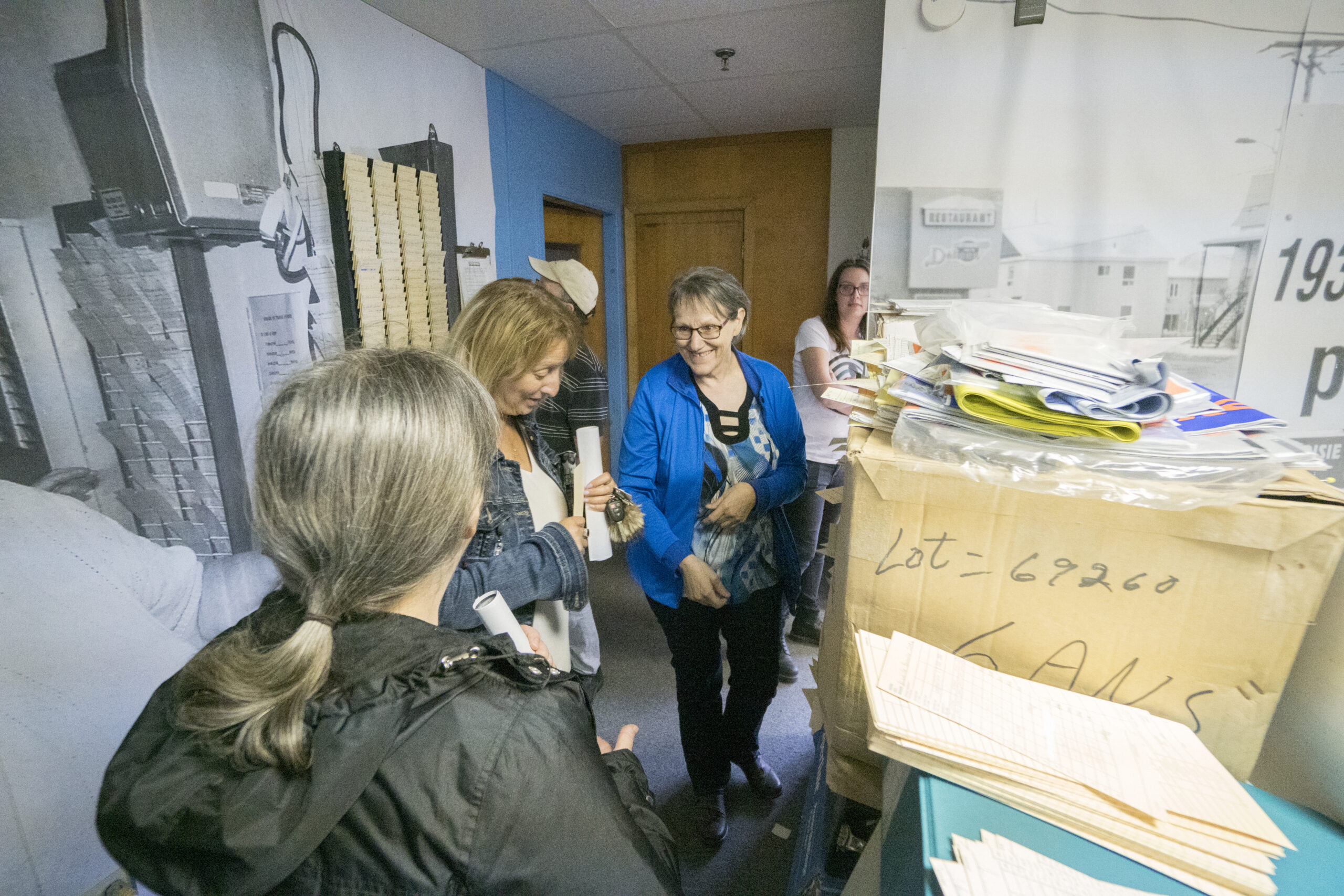
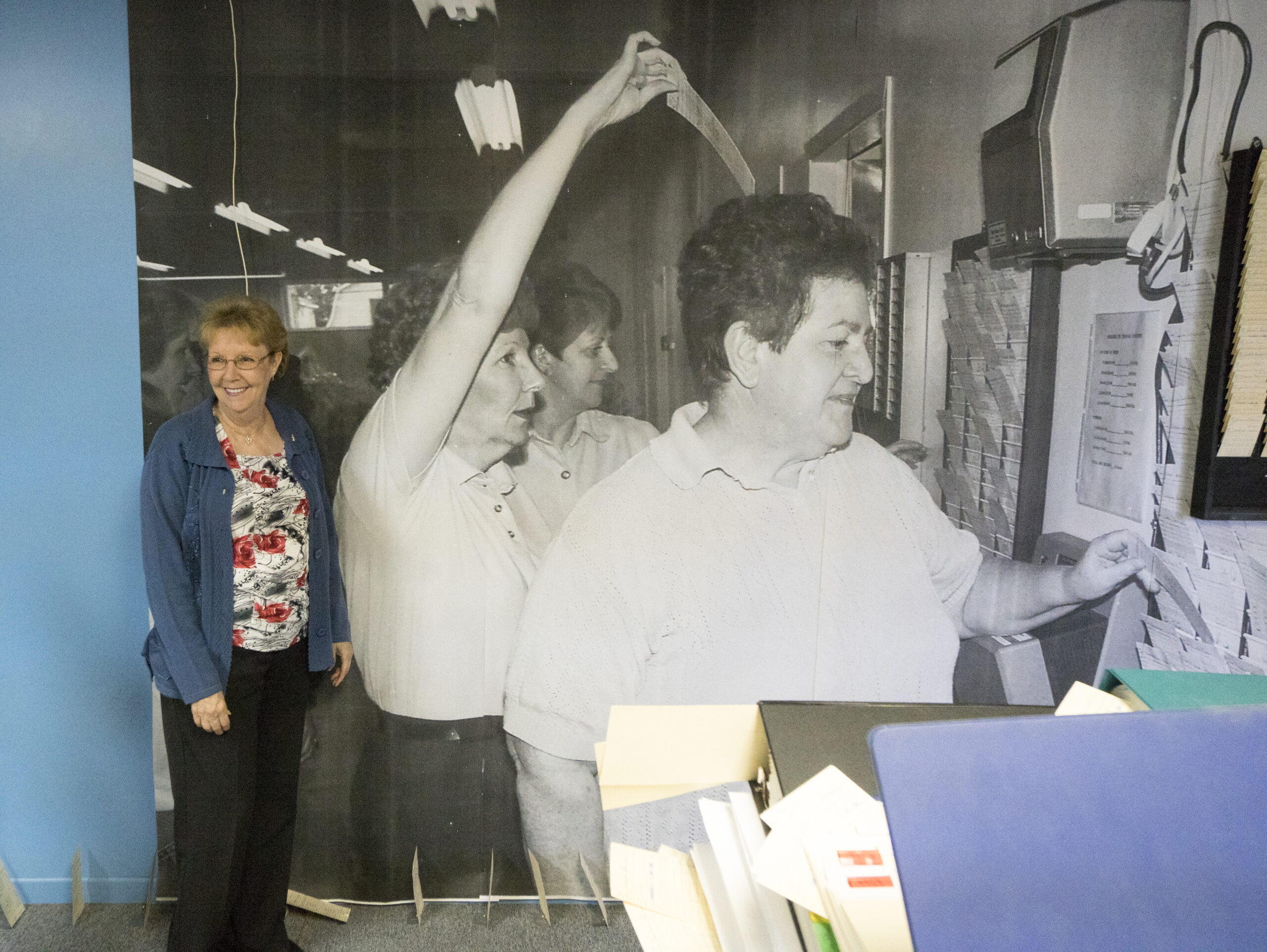
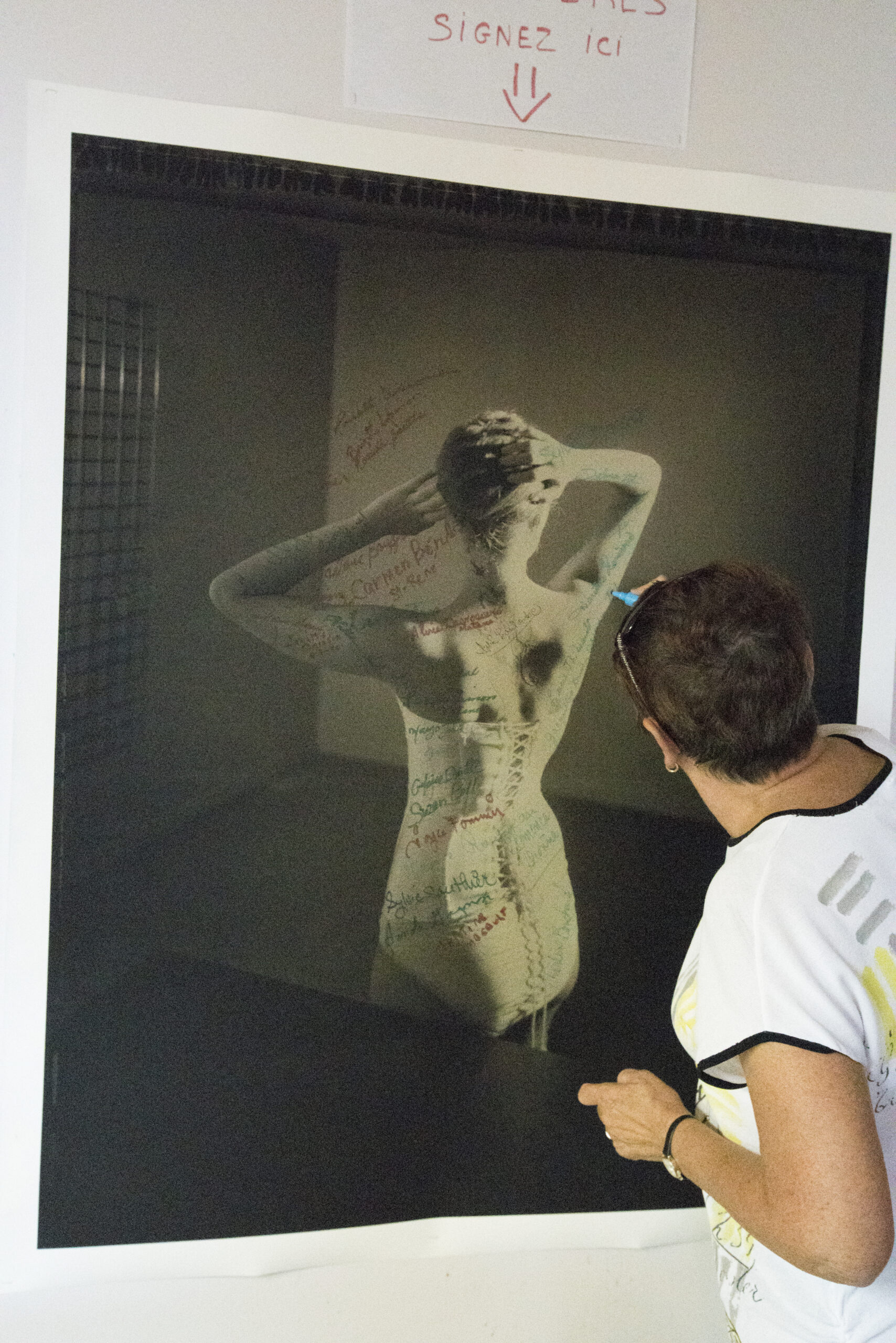
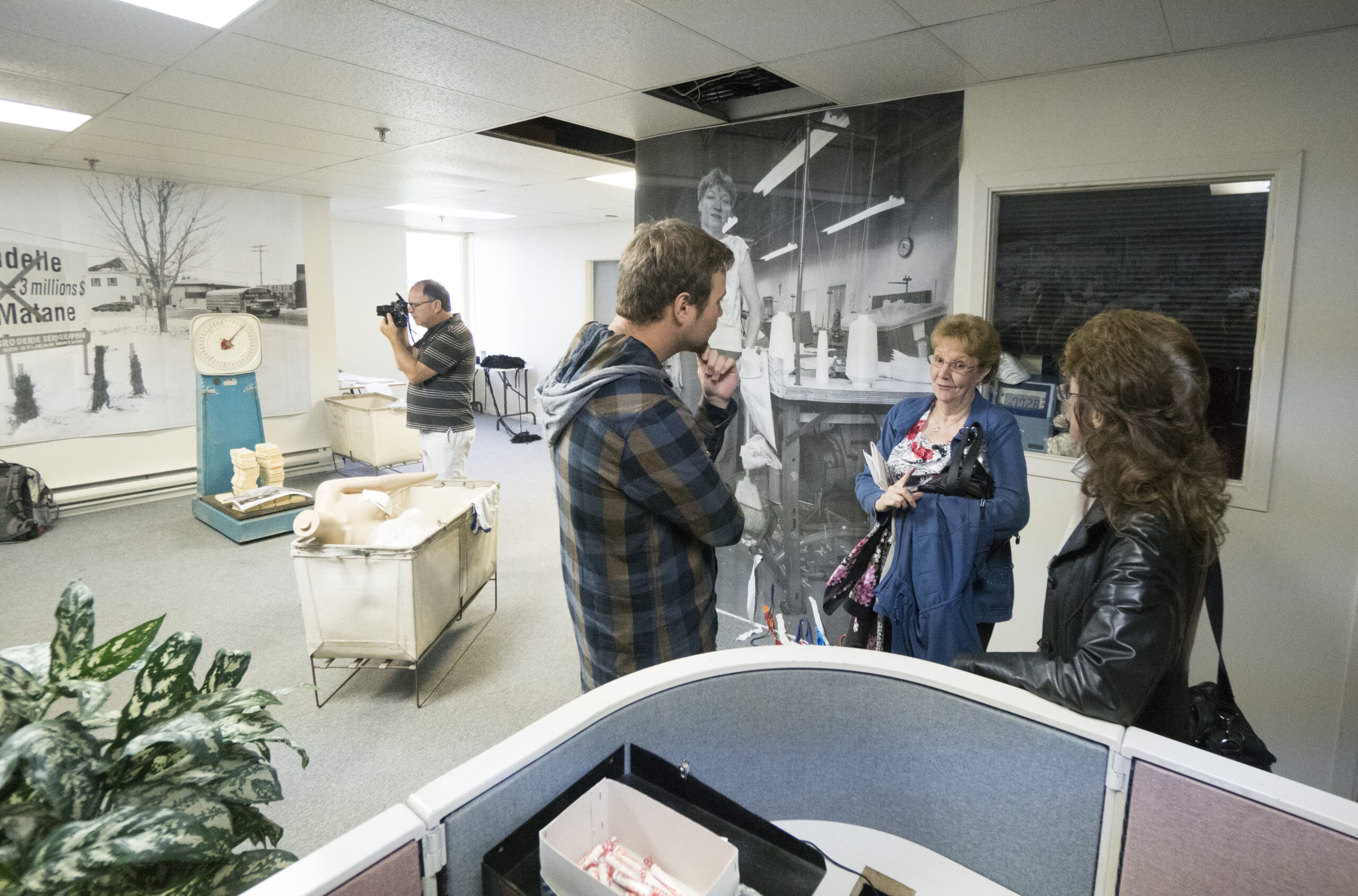
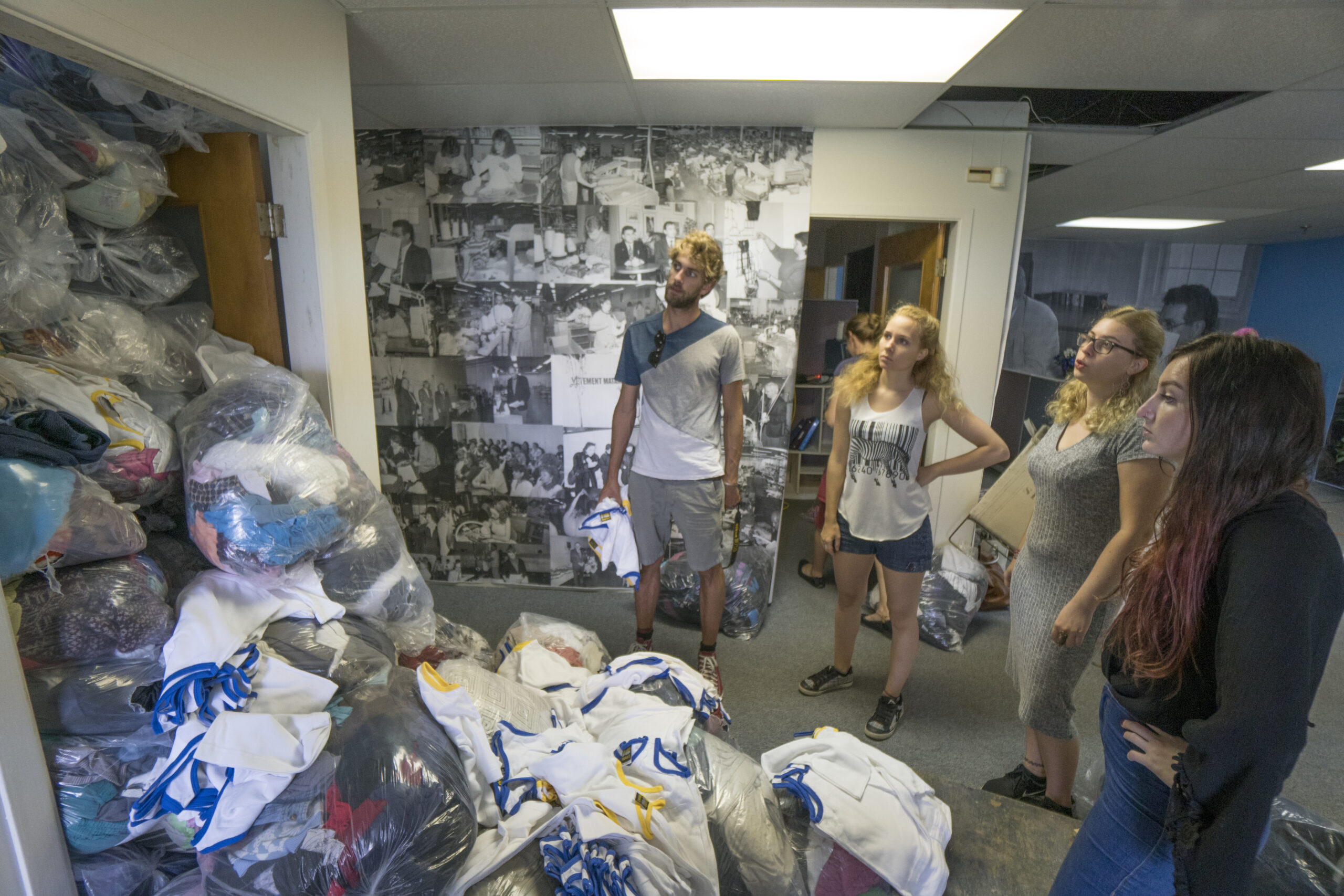
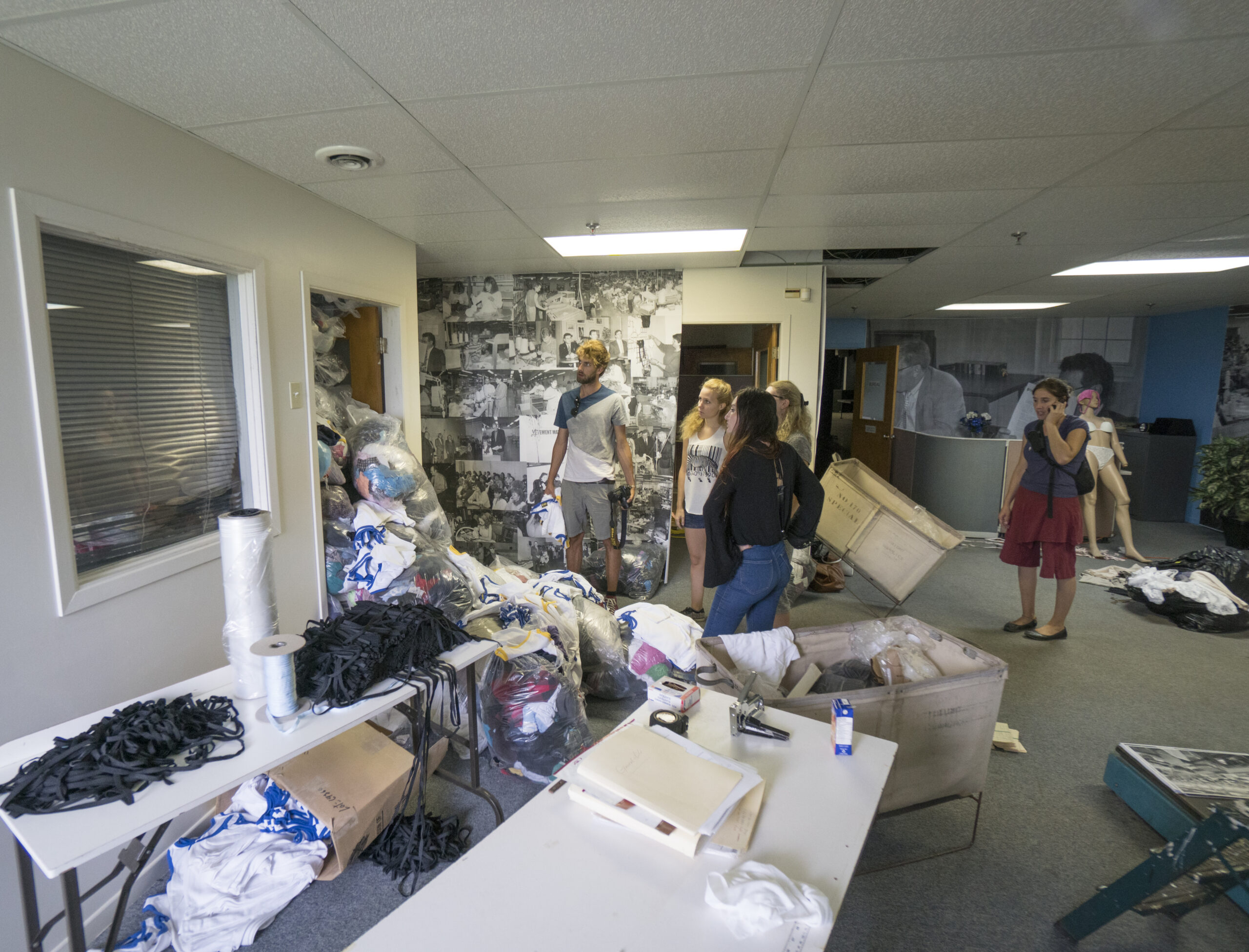
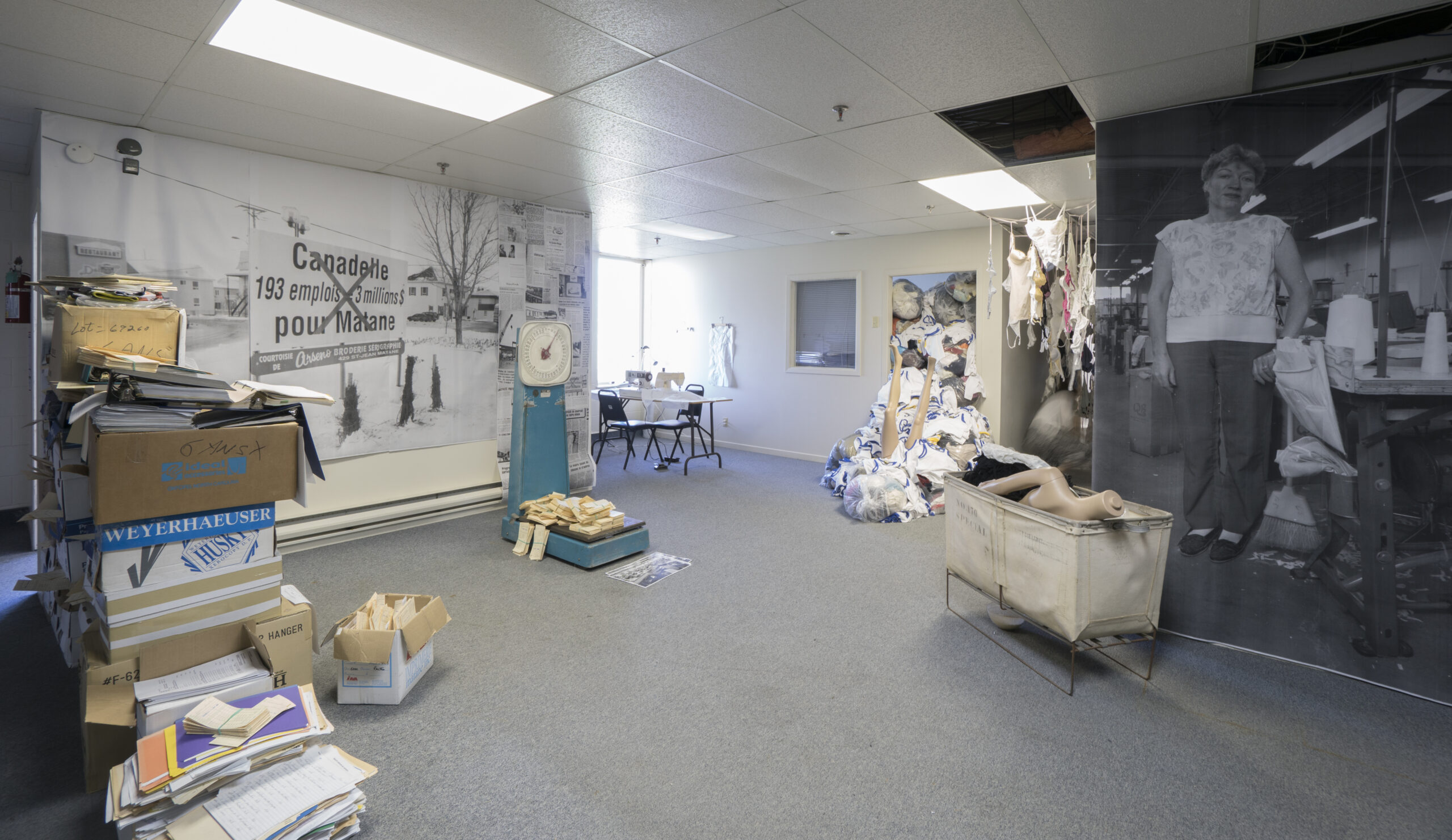
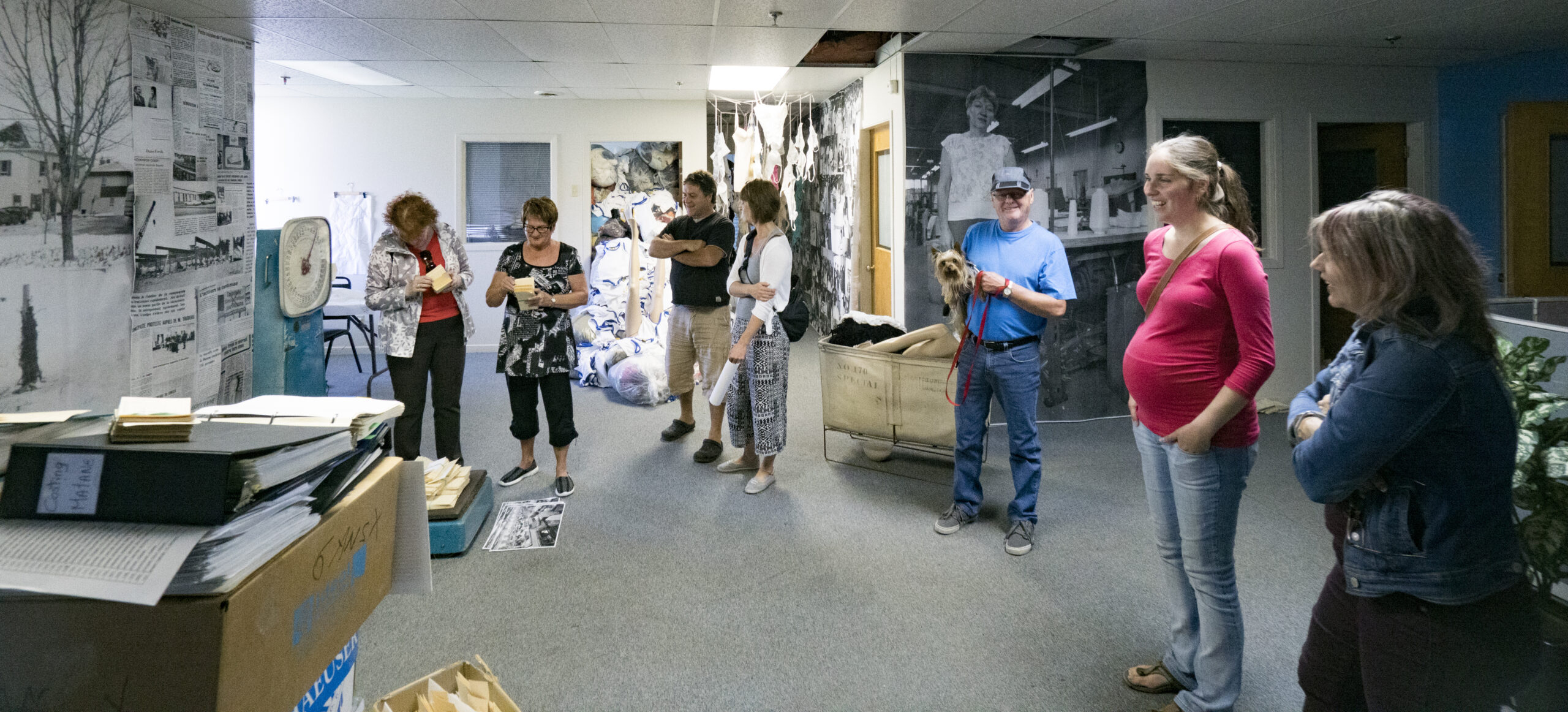
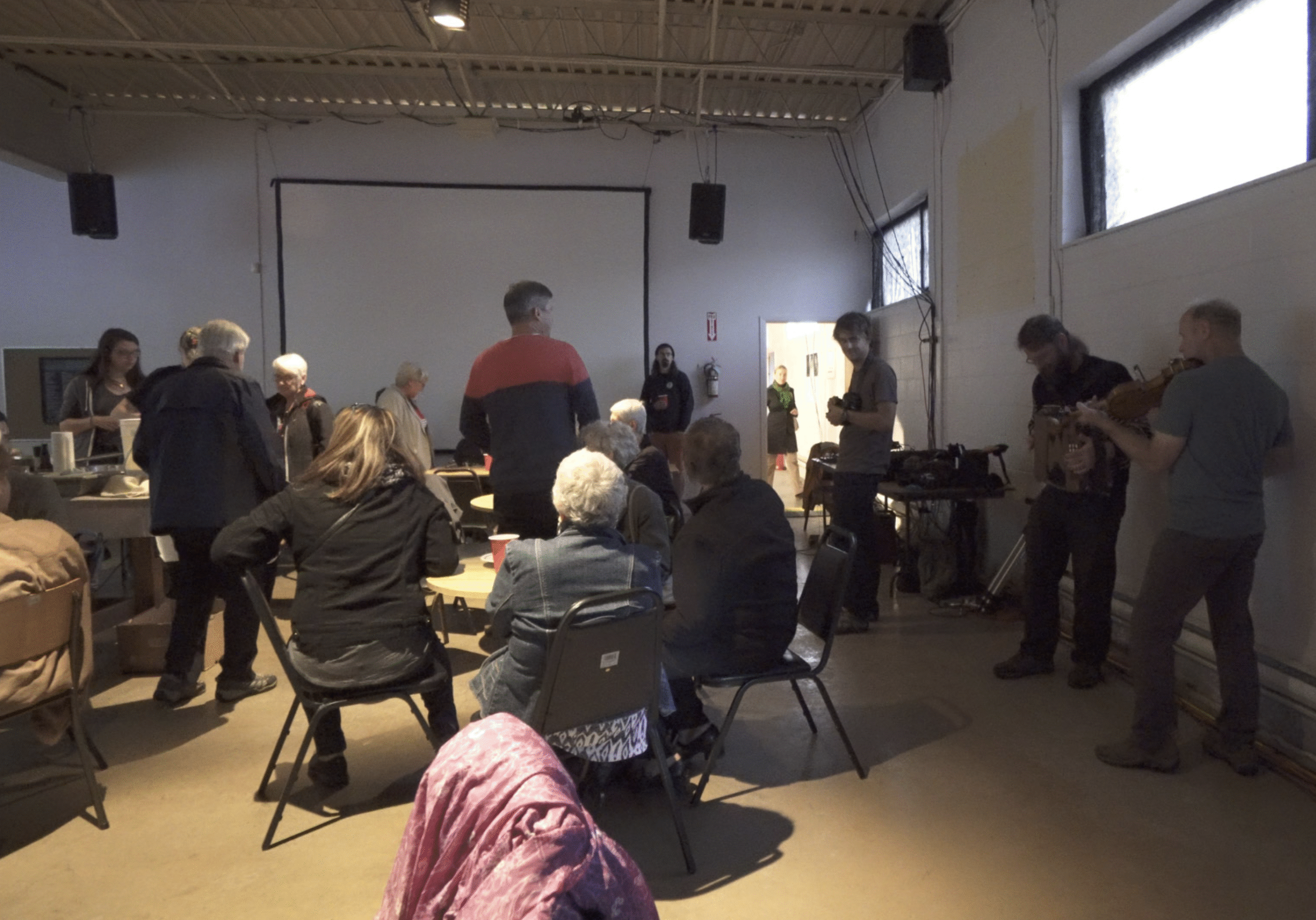
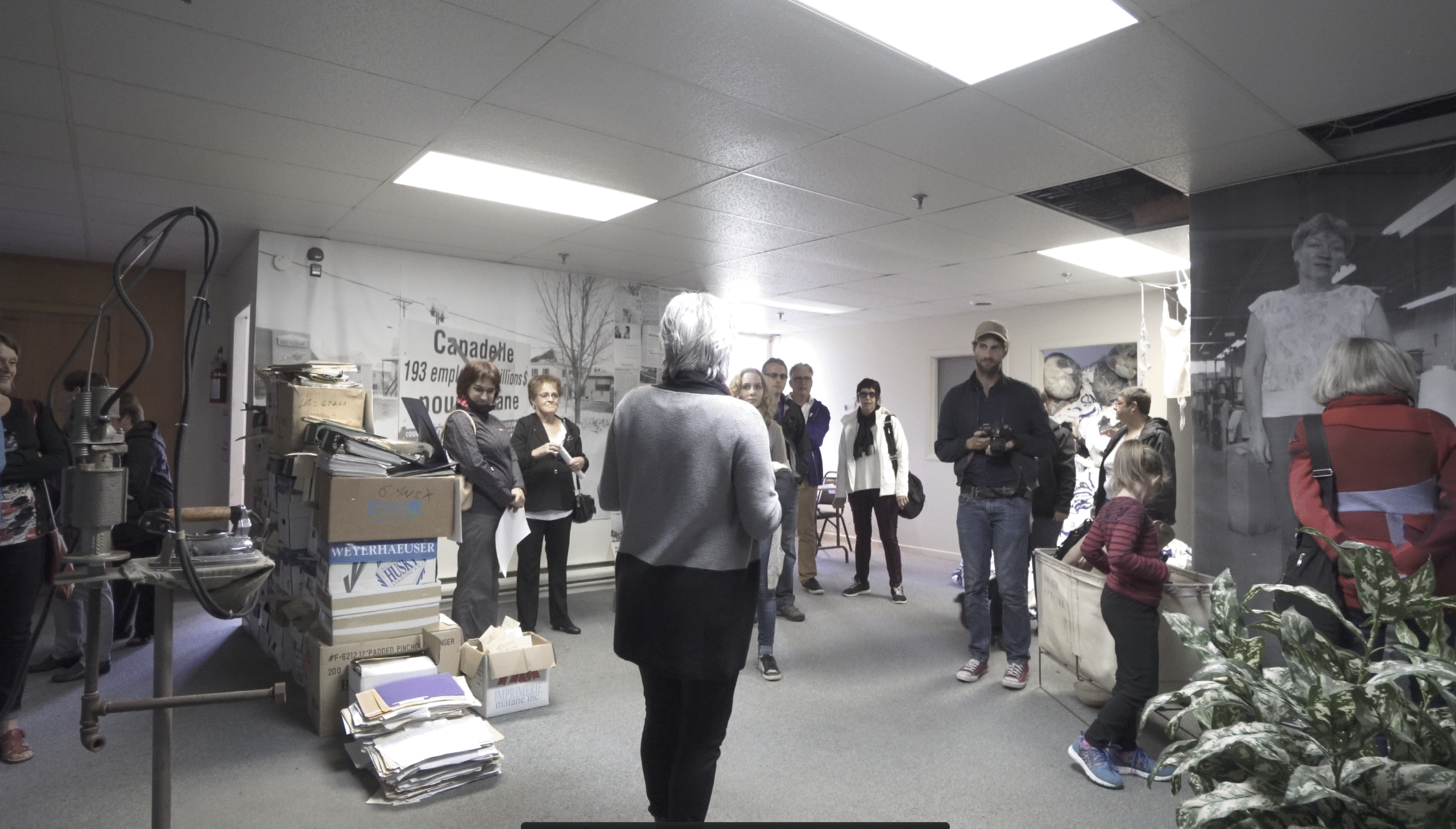
J’ai invité artistes, étudiants et citoyens à rendre hommage aux couturières qui avaient travaillé dans l’usine. L’intervention s’est déployée dans les anciens bureaux de la direction, transformés en espace d’exposition, et dans la cafétéria, réinvestie comme lieu de rencontre et de partage.
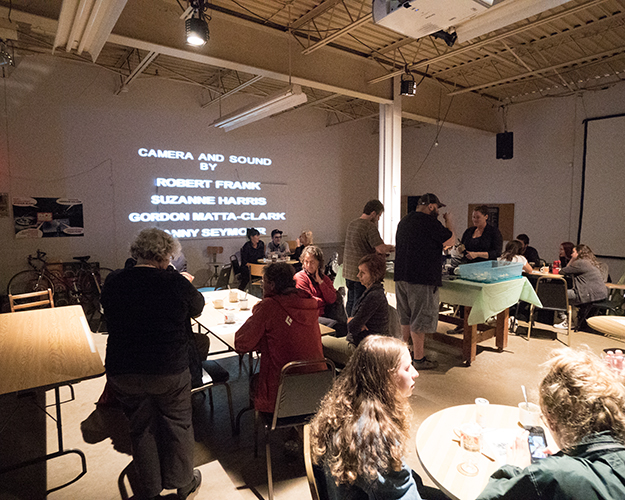
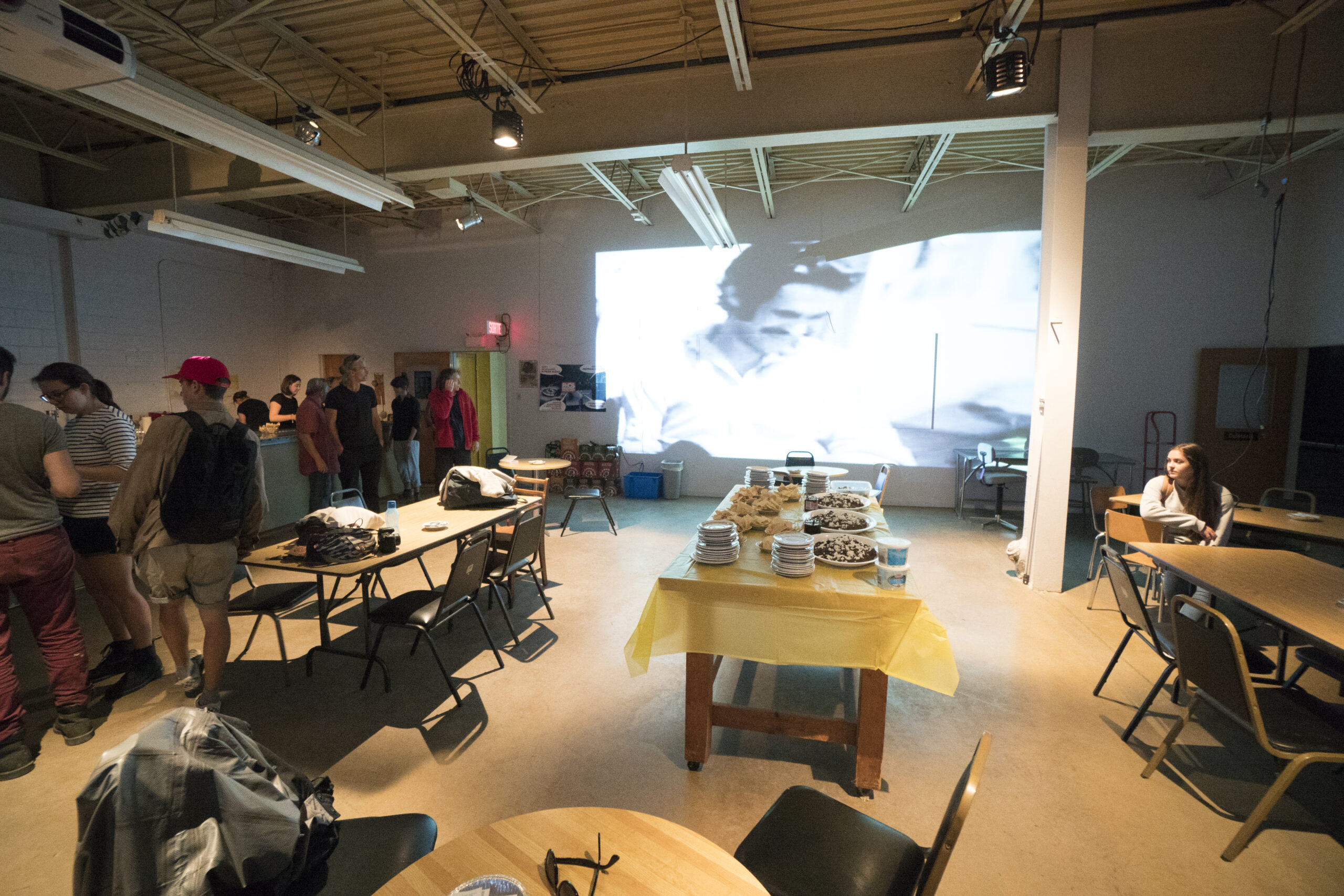
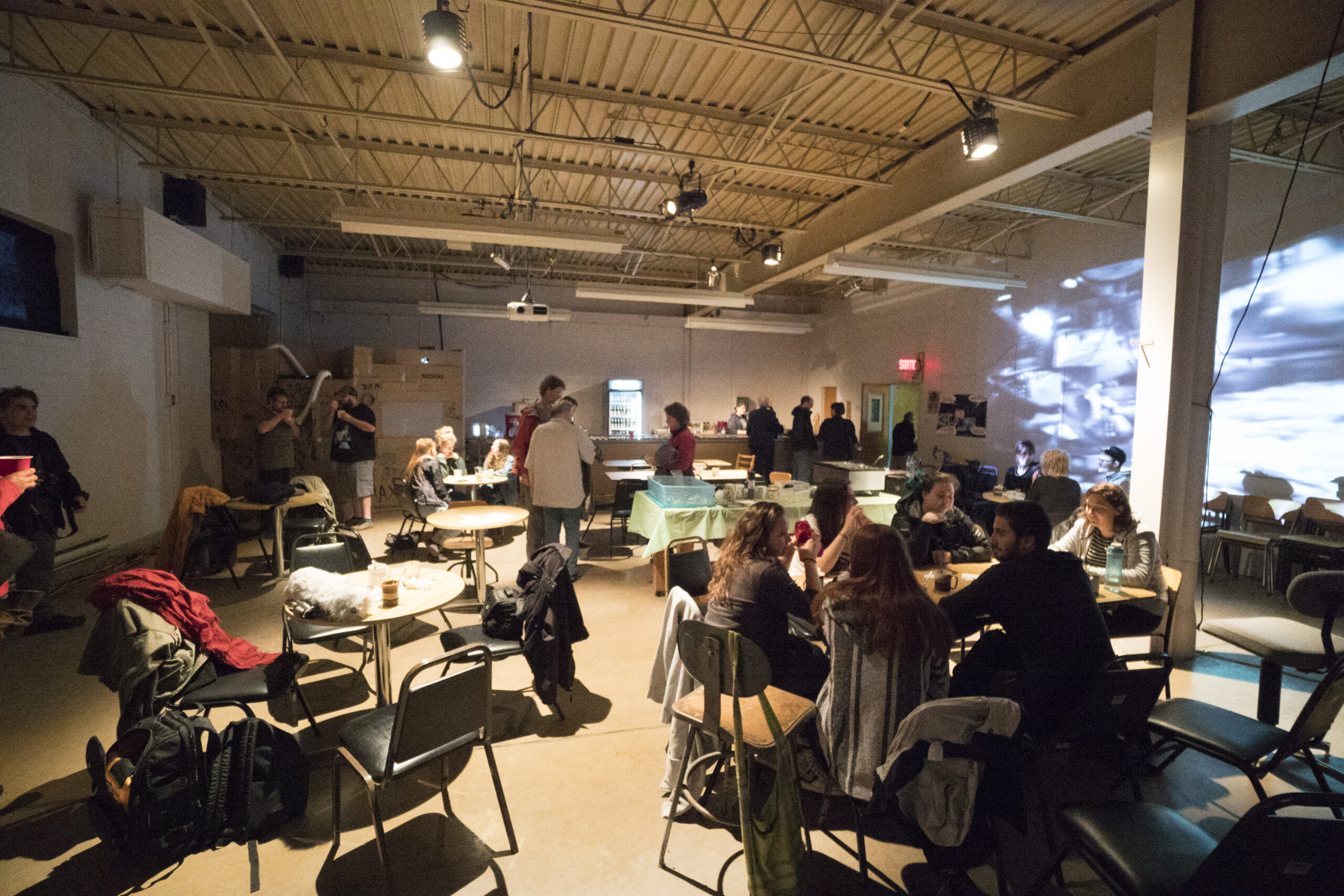
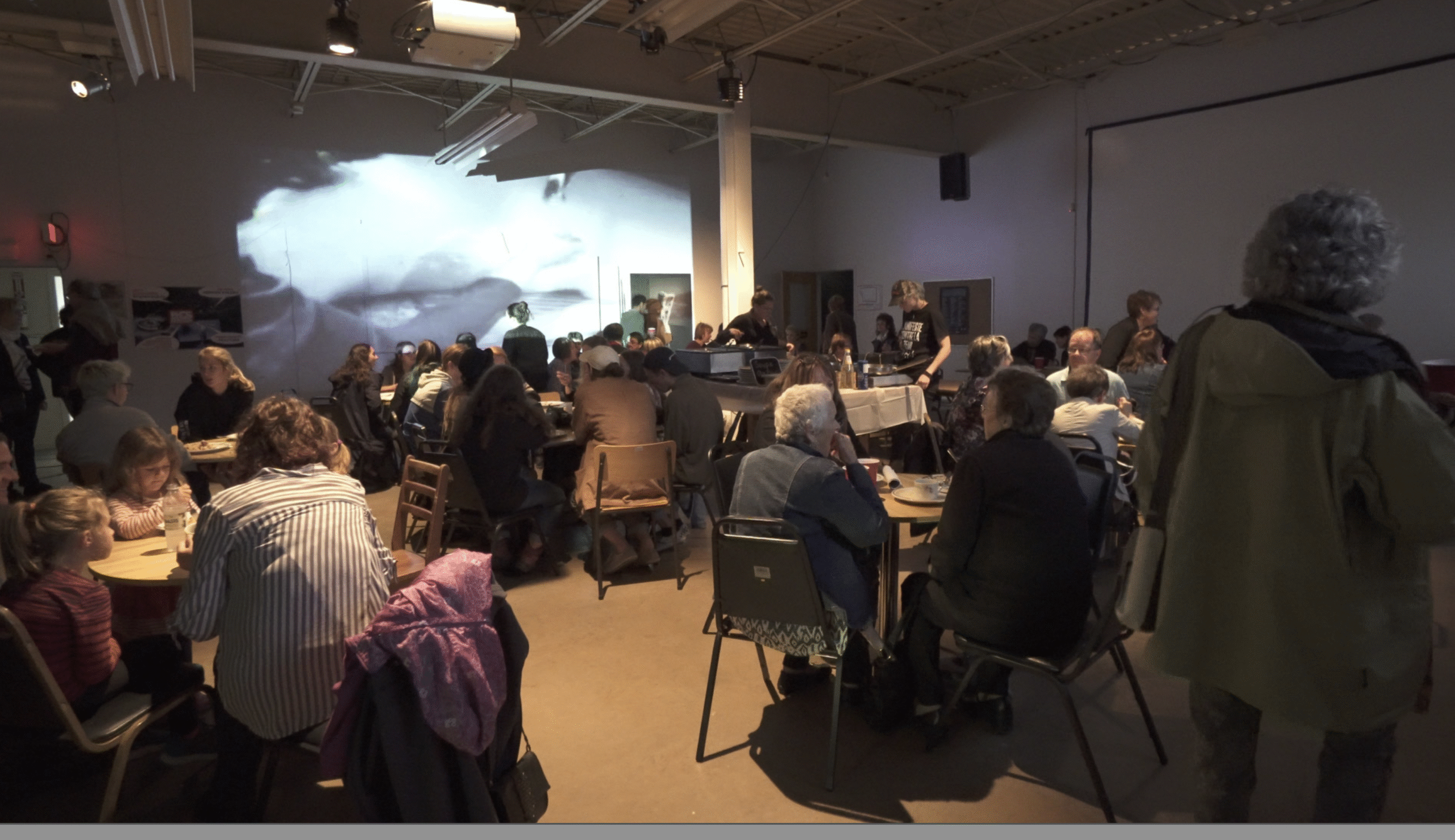
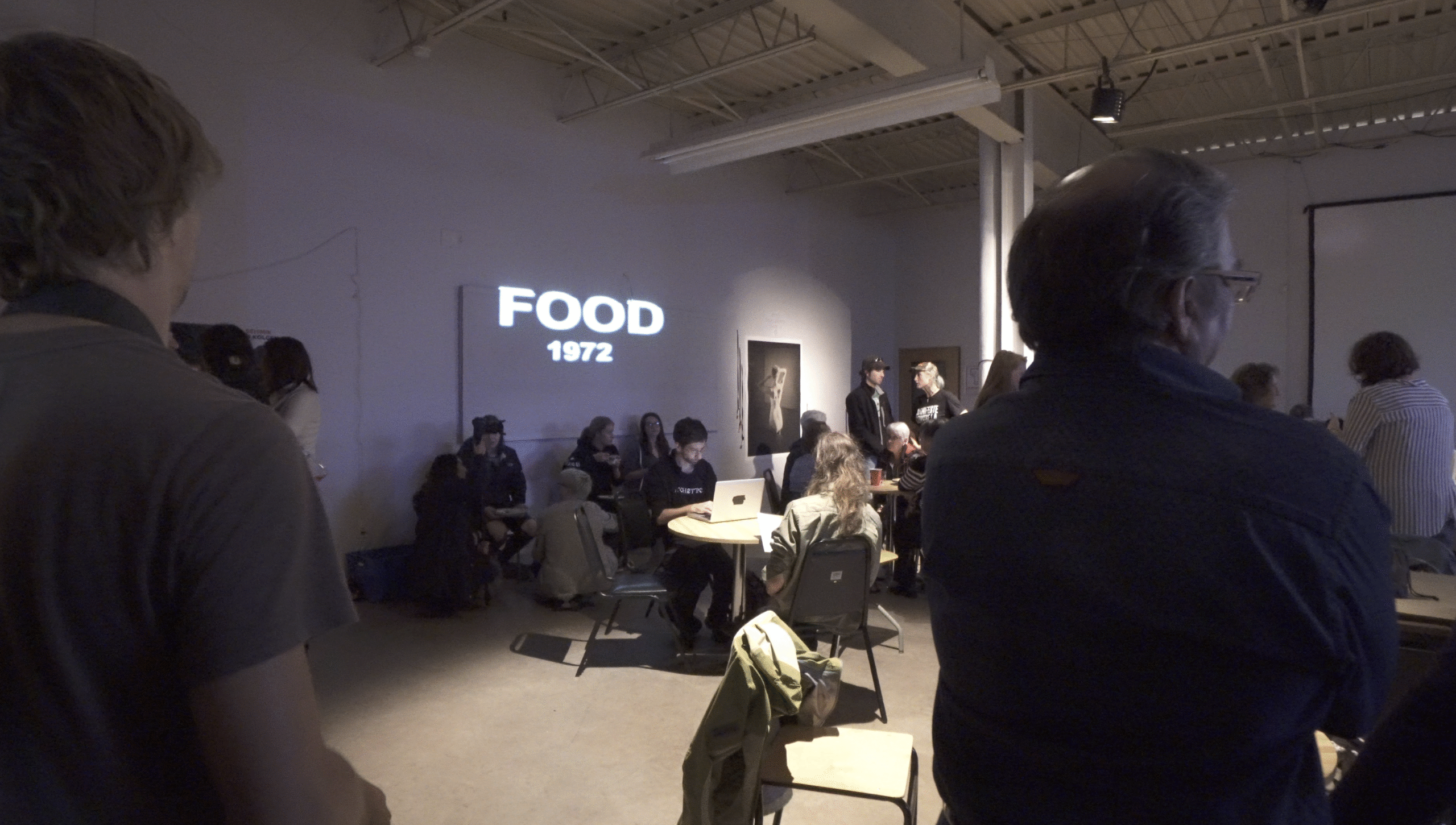
Dans cette cafétéria, les visiteurs étaient conviés à manger — un geste simple, mais chargé de sens — tout en assistant à la projection du film Food, qui documente les réalisations de Matta-Clark et son collectif dans un restaurant expérimental à New York. Ce parallèle entre les gestes artistiques et les gestes nourriciers créait un pont entre les époques, les lieux et les luttes.
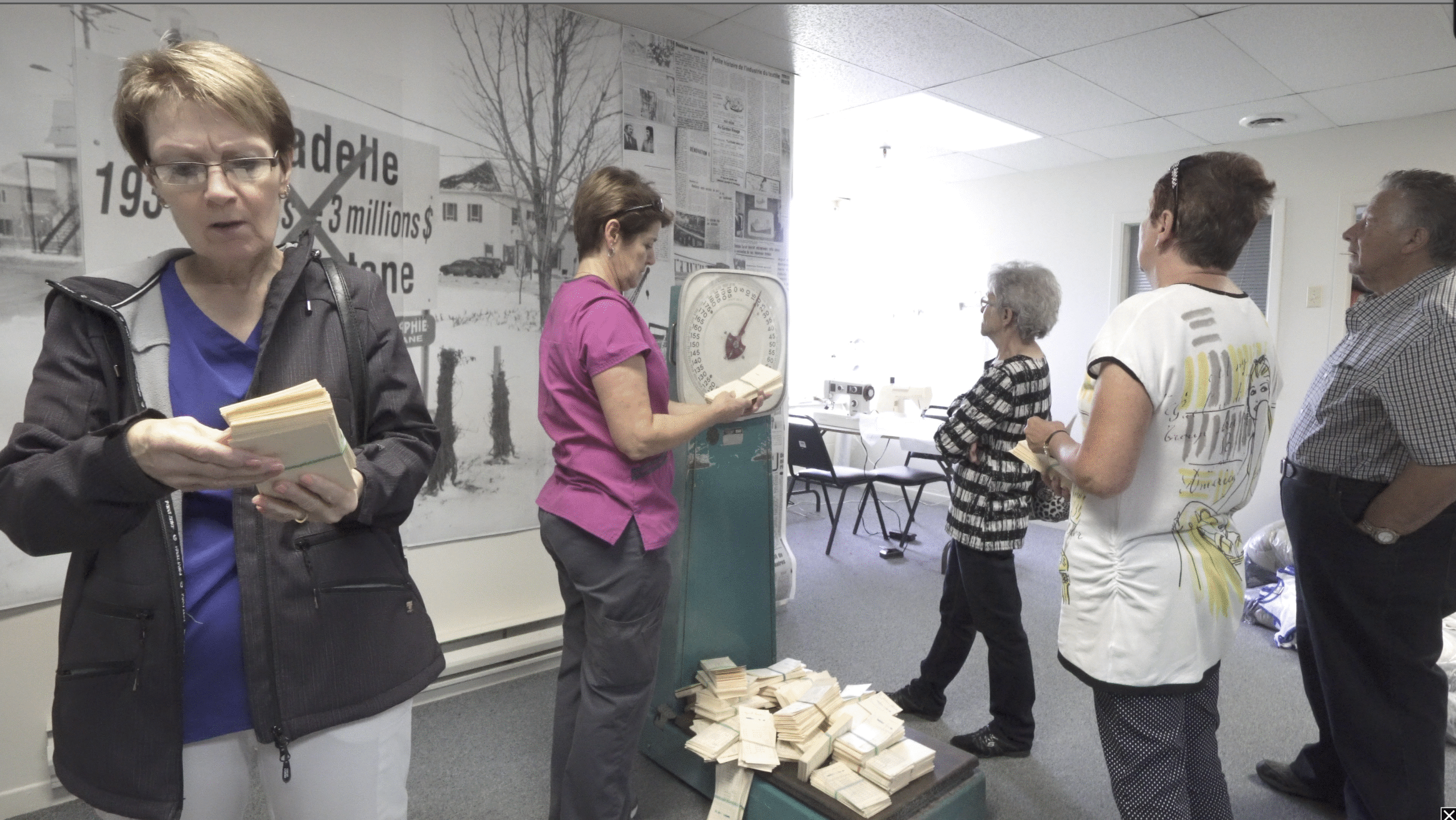
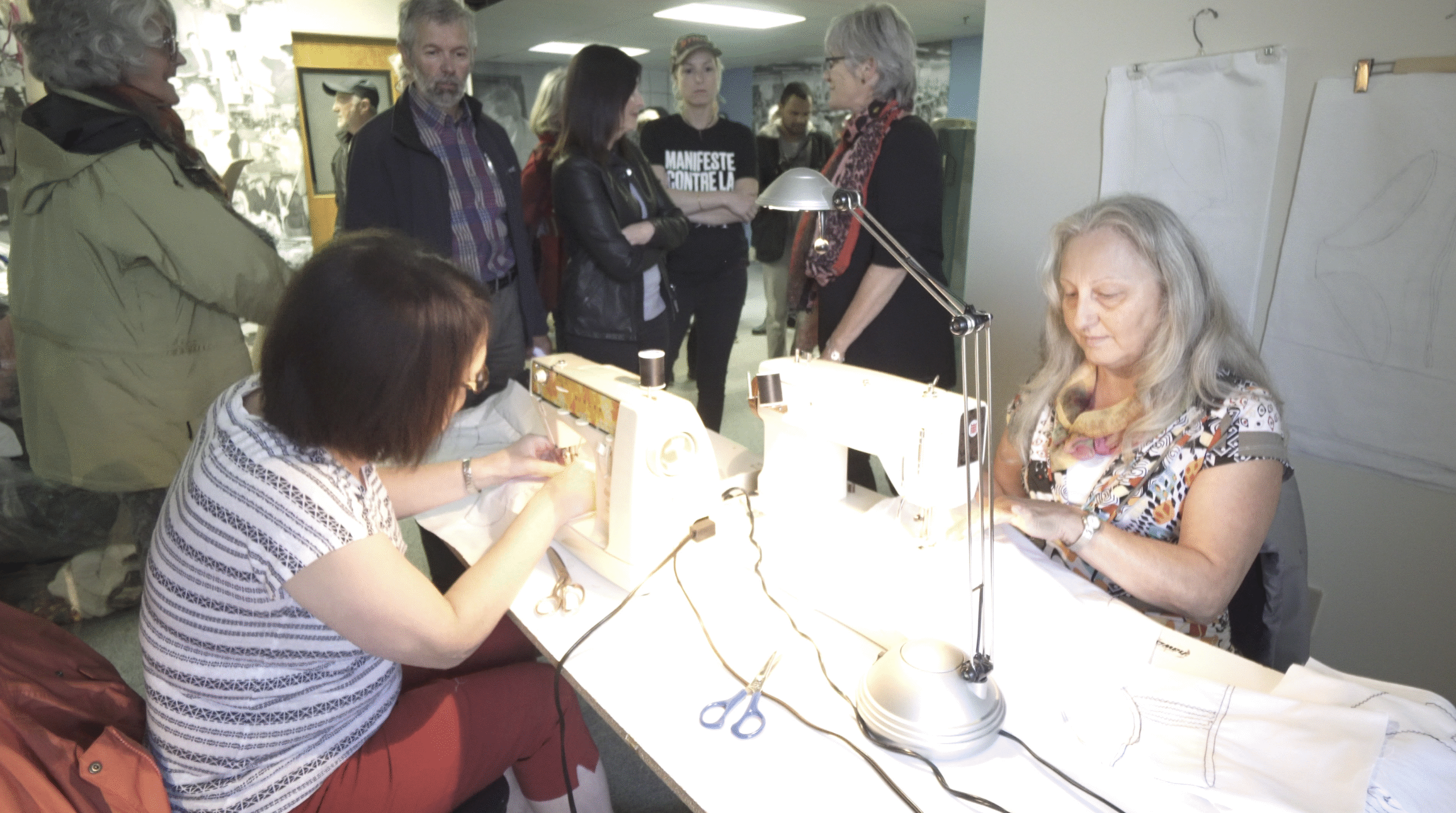
L’artiste performeuse Ginette Bernier a proposé une œuvre touchante : elle a invité d’anciennes couturières à reprendre place devant des machines à coudre, tout en discutant avec elle de leur vécu. Les visiteurs circulaient librement, assistant à ces échanges empreints d’émotion, de mémoire et de dignité.
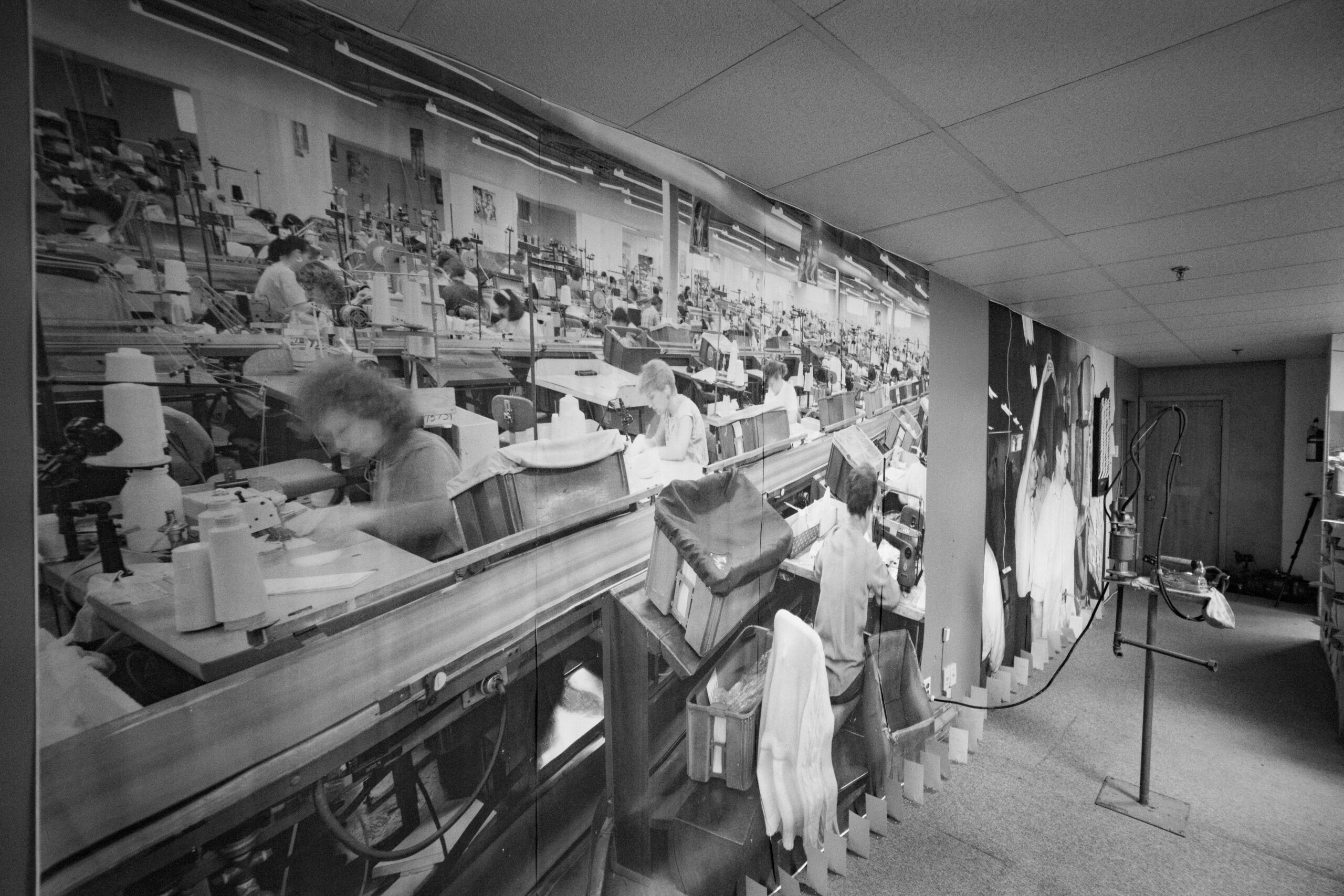
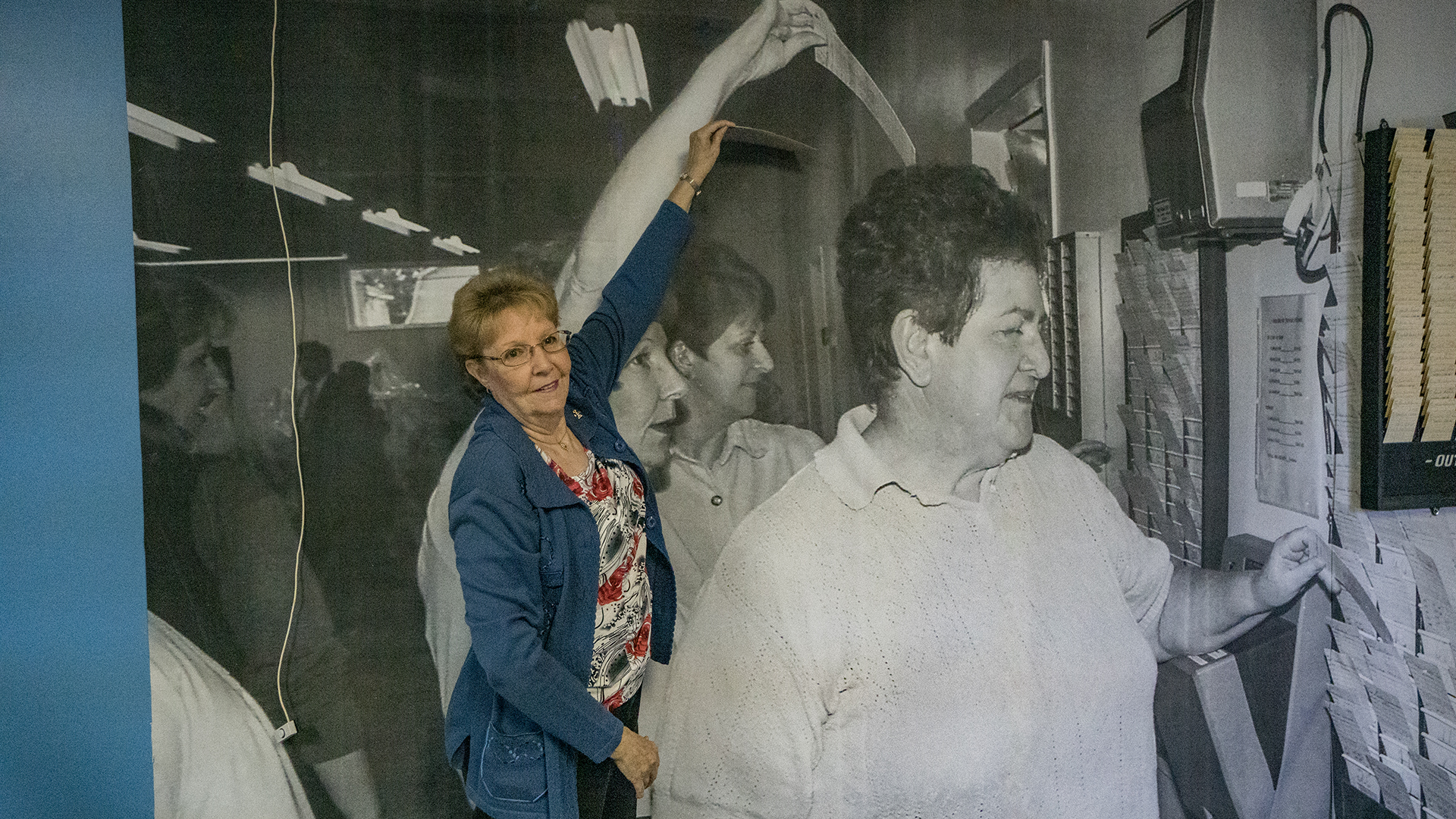
Romain Pelletier, ancien étudiant en photographie, a enrichi le projet avec ses images journalistiques, témoignant des années d’activité de l’usine. Son regard documentaire a offert une profondeur historique à l’ensemble.
Gentiane LaFrance a eu la brillante idée d’utiliser les cartes de travail ainsi que les boîtes de documentation des employés pour susciter l’idée de la recherche historique.
Ce projet a transformé un lieu abandonné en espace vivant, critique, et profondément humain. L’art y a pris la forme d’un hommage collectif, à la fois performatif, photographique et participatif.
English
As part of my interdisciplinary master’s in art, I proposed a participatory project for the Phos event in Matane, held in the former Canadelle factory — an industrial site closed for years, still owned by a Montreal entrepreneur. Inspired by Gordon Matta-Clark’s Food project (1971), I imagined an artistic action that would reactivate the workers’ memory of the place.
I invited artists, students, and citizens to pay tribute to the seamstresses who once worked in the factory. The intervention unfolded in the former management offices, transformed into an exhibition space, and in the cafeteria, reinvested as a place of gathering and sharing.
In the cafeteria, visitors were invited to eat — a simple yet meaningful gesture — while watching a projection of Food, the film documenting Matta-Clark’s experimental restaurant in New York. This parallel between artistic and nourishing gestures created a bridge between eras, places, and struggles.
Performance artist Ginette Bernier offered a moving piece: she invited former seamstresses to sit once again at sewing machines and speak with her about their experiences. Visitors moved freely, witnessing these exchanges filled with emotion, memory, and dignity.
Romain Pelletier, a former photography student, enriched the project with his journalistic images, documenting years of activity at the factory. His documentary eye added historical depth to the whole.
Gentiane LaFrance had the brilliant idea of using work cards and employee documentation boxes to spark historical inquiry.
This project transformed an abandoned site into a living, critical, and deeply human space. Art became a collective tribute — performative, photographic, and participatory.
Español
Como parte de mi maestría interdisciplinaria en arte, propuse un proyecto participativo para el evento Phos en Matane, realizado en la antigua fábrica Canadelle — un sitio industrial cerrado desde hace años, aún propiedad de un empresario de Montreal. Inspirado por el proyecto Food de Gordon Matta-Clark (1971), imaginé una acción artística que reactivara la memoria obrera del lugar.
Invité a artistas, estudiantes y ciudadanos a rendir homenaje a las costureras que trabajaron en la fábrica. La intervención se desplegó en las antiguas oficinas de la dirección, transformadas en espacio expositivo, y en la cafetería, reinvertida como lugar de encuentro y de intercambio.
En la cafetería, los visitantes fueron invitados a comer — un gesto simple pero cargado de sentido — mientras se proyectaba el filme Food, que documenta el restaurante experimental de Matta-Clark en Nueva York. Este paralelismo entre gestos artísticos y gestos nutritivos creó un puente entre épocas, lugares y luchas.
La artista performática Ginette Bernier ofreció una obra conmovedora: invitó a antiguas costureras a sentarse nuevamente frente a las máquinas de coser y conversar con ella sobre sus vivencias. Los visitantes circulaban libremente, presenciando estos intercambios llenos de emoción, memoria y dignidad.
Romain Pelletier, ex estudiante de fotografía, enriqueció el proyecto con sus imágenes periodísticas, testimonio de los años de actividad en la fábrica. Su mirada documental aportó una profundidad histórica al conjunto.
Gentiane LaFrance tuvo la brillante idea de utilizar las tarjetas de trabajo y las cajas de documentación de los empleados para suscitar la investigación histórica.
Este proyecto transformó un lugar abandonado en un espacio vivo, crítico y profundamente humano. El arte tomó la forma de un homenaje colectivo — performativo, fotográfico y participativo.
Deutsch
Im Rahmen meines interdisziplinären Kunststudiums schlug ich ein partizipatives Projekt für das Phos-Festival in Matane vor, das in der ehemaligen Canadelle-Fabrik stattfand — ein seit Jahren stillgelegter Industriestandort, der noch immer einem Unternehmer aus Montreal gehört. Inspiriert vom Projekt Food von Gordon Matta-Clark (1971) entwarf ich eine künstlerische Aktion, die das Arbeitergedächtnis des Ortes wiederbeleben sollte.
Ich lud Künstlerinnen, Studierende und Bürgerinnen ein, den Näherinnen zu gedenken, die einst in der Fabrik gearbeitet hatten. Die Intervention fand in den ehemaligen Büros der Geschäftsleitung statt, die in einen Ausstellungsraum verwandelt wurden, sowie in der Cafeteria, die als Ort der Begegnung und des Austauschs neu belebt wurde.
In der Cafeteria wurden die Besucher*innen zum Essen eingeladen — eine einfache, aber bedeutungsvolle Geste — während der Film Food gezeigt wurde, der Matta-Clarks experimentelles Restaurant in New York dokumentiert. Diese Verbindung zwischen künstlerischen und nährenden Gesten schlug eine Brücke zwischen Zeiten, Orten und Kämpfen.
Performance-Künstlerin Ginette Bernier präsentierte ein berührendes Werk: Sie lud ehemalige Näherinnen ein, sich erneut an die Nähmaschinen zu setzen und mit ihr über ihre Erfahrungen zu sprechen. Die Besucher*innen bewegten sich frei durch den Raum und wurden Zeugen dieser emotionalen, würdevollen Erinnerungen.
Romain Pelletier, ein ehemaliger Fotografie-Student, bereicherte das Projekt mit seinen journalistischen Bildern, die die Jahre der Fabriktätigkeit dokumentieren. Sein dokumentarischer Blick verlieh dem Ganzen historische Tiefe.
Gentiane LaFrance hatte die brillante Idee, Arbeitskarten und Dokumentationsboxen der Mitarbeiter*innen zu nutzen, um historische Recherche anzuregen.
Dieses Projekt verwandelte einen verlassenen Ort in einen lebendigen, kritischen und zutiefst menschlichen Raum. Die Kunst wurde zu einem kollektiven Tribut — performativ, fotografisch und partizipativ.